

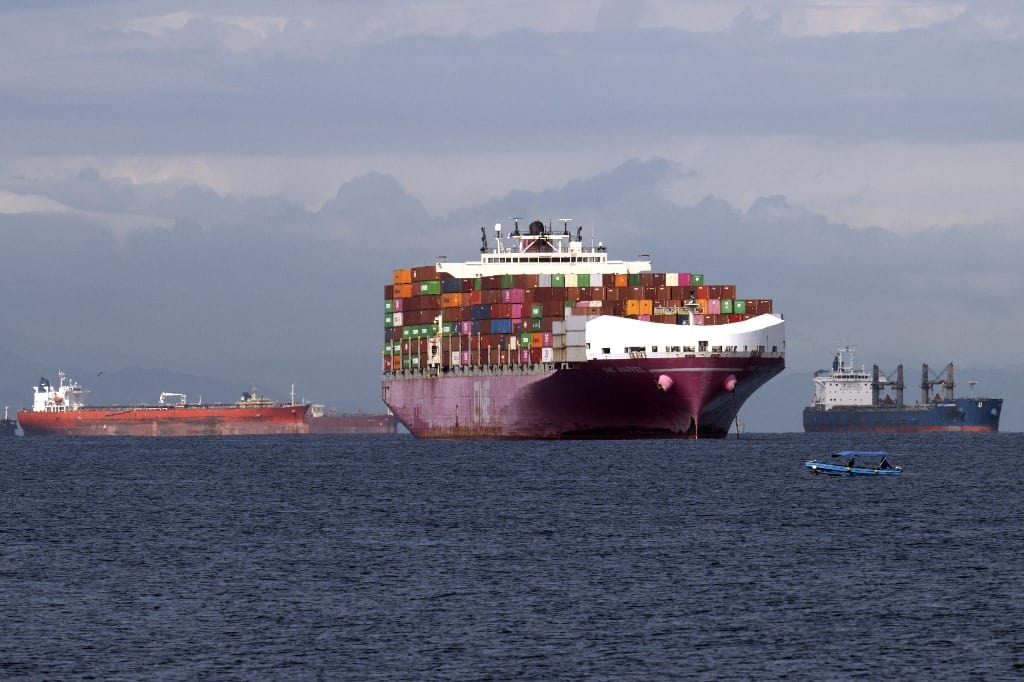
The Panama Canal, the vital waterway that connects the Atlantic and Pacific Oceans, is facing an unprecedented drought that is severely impacting operations. On Tuesday, the Panama Canal Authority (ACP) announced it will begin reducing the number of daily ship crossings starting November 3rd in an effort to conserve water.
This iconic canal, which facilitates the passage of approximately 6% of global maritime trade, has never before faced such dire water shortage issues in its over 100 years of operation. While the canal has dealt with periodic droughts in the past, the current dry conditions are the most extreme on record.
According to ACP, October 2022 was the driest month in the past 73 years since rainfall records began being kept for the canal watershed. The ongoing drought has been exacerbated by the El Niño climatic phenomenon which continues to severely diminish the canal’s reservoir system.
As a result of the dramatic decrease in water availability, the ACP said it will incrementally reduce daily ship crossings over the coming months. From November 3-7, transits will be reduced from the current 29 to 25 ships per day. Further reductions to 24 ships are planned from November 8-30, down to 22 ships in December, 20 ships in January, and eventually only 18 ships per day from February onwards.
“The late arrival of the rainy season this year and the lack of rainfall in the canal basin has forced the canal to reduce transit,” ACP said in a statement to its clients announcing the crossing cuts.
The Canal has already taken mitigating steps in recent months such as reducing the draft (how deep ships can be submerged) for vessel transits, forcing some ships to offload cargo to meet the shallower requirements. However, the ACP determined further reductions in crossings are imperative to conserve the remaining water.
The newly announced transit decreases will likely lead to a steep drop in revenues for the canal. Earlier this year, the ACP had already forecasted a $200 million decline in 2024 revenue based on reduced ship movements.
In August, Canal Administrator Ricaurte Vásquez acknowledged the waterway urgently requires an additional freshwater source to restore full operation capacity. As a result, the ACP is actively exploring constructing a new reservoir along the Indio River west of the canal to channel additional water to the Gatun Lake reservoir. Tapping into Lake Bayano to the east is another option under consideration.
The Panama Canal is unique from other major canals like the Suez in that it utilizes freshwater from tropical rainfall, rather than seawater, for locks and vessel transits. For decades, the abundant regional rainfall kept the canal operating at full capacity. But with rainfall declining sharply, the ACP is for the first time dealing with potential freshwater shortages.
Gatun Lake remains the primary water reservoir enabling canal operations ever since the U.S. constructed and opened the isthmian crossing in 1914. At the time, the ample rainfall likely prevented planners from foreseeing freshwater supply issues in the future.
Each vessel transit utilizes over 200 million liters of freshwater as it passes through the three lock chambers that raise and lower ships 85 feet between the Atlantic and Pacific. While previously not an issue, the ACP has been forced to take every measure to conserve water including the reduced ship crossings.
The decreased canal crossings have resulted in long lines of ships waiting to enter. In early August, a record 163 vessels were reported waiting to make the crossing. The limited slots have been auctioned off, with a chemical tanker recently paying a record $2.4 million fee to jump ahead of the line and ensure on-time delivery.
While these measures have helped confront the immediate crisis, the ACP recognizes a long-term solution is required to supply the waterway during future droughts. The Indio River dam and Lake Bayano water diversion projects currently under review will hopefully provide the canal with a drought-resilient freshwater supply.
The Panama Canal remains a vital artery for global shipping and trade. As Central Americans, we are proud of this iconic canal, but also realize climate change and extreme weather now pose challenges unimagined by its builders. We hope ACP experts can adapt the canal to meet these modern threats and keep this linchpin of international commerce operating for the next 100 years.





